Tuesday, February 17, 2026

Hazelwoods Wetlands

 
Out with my friend Karen at the Hazelwood Wetlands last Thursday. It was one of those rare sunny winter days. The sketching was quick, the conversation long and the tea delicious. 


Monday, February 2, 2026

Buds

Buds are embryonic. I love the way that Biology uses the same terminology for both flora and fauna. 


Buds are embryonic, undeveloped shoots from which leaves, stems and flowers arise.
Scales are a protective layer keeping woody plant buds dormant and safe through cold winters.


Some plants break out leaves first, then flowers follow. This is called Synanthous. Other plants flower first and then their leaves break out.  And some just have one huge bud. 

Synanthous plants are the most common. After all they need photosynthesis and respiration almost immediately.  

Hysteranthos are less common. These include Redbud, Witch Hazel, Forsythia, Magnolia, Cherry Blossom, Paper Bush, and various bulbs like Colchicum, Crocus, and Amaryllis

Mixed Buds include  maples, apples, and cherries


 about buds

Saturday, January 24, 2026

From my nature journal


Here are some excerpts from my Nature Journal about
 Fruits and Seeds 


Friday, January 23, 2026

Specimen Cards

Here are some specimen cards created with the Nature Explores Club sponsored by the
Sammamish Heritage Garden 


Monday, January 19, 2026

Sunday, January 18, 2026

I'm stumped at the Soaring Eagle Park

So yesterday I took a walk through parts of Soaring Eagle Park. This park is north of me and not far from Inglewood Middle School. A storm of questions have been circling since, mostly about the logging history.  There are so many tree stumps with so few fallen trunks. This must be an old logging site. But when? Was it in the 1930’s? Before or after that date? Was it a clear cut? I think not. I did some cursory research and found that it has become a King County Park in 1993. Before that is was under the jurisdiction of the DNR- Department of Natural Resources established in 1957. Did they sanction the logging? OR did it happen when the Commissioner of Public lands reigned from 1889 to 1957? 


Do they hope the forest will recover by itself, over time? 100 years maybe? More? 


Like always, when I take a walk, I come away with more questions than I have answers to. Alex and I are heading to REI downtown today to buy some maps of the area. I also ordered  a local hiking book that delves into the history of the areas. The library might be another resource. 


Thursday, May 1, 2025

The Prado

I could have come here every day for a month. We saw very little.  But it was magnificent. No photos allowed, but I did find these images on the Prado website. 


"Las Meninas," meaning "The Maids of Honor," A 1656 painting by Diego Velázquez


 "Blind Man's Bluff," a 1787 painting by Francisco de Goya

Created as a plan for weaving a Tapestry.


"The Third of May 1808" is a painting by the Spanish artist Francisco Goya


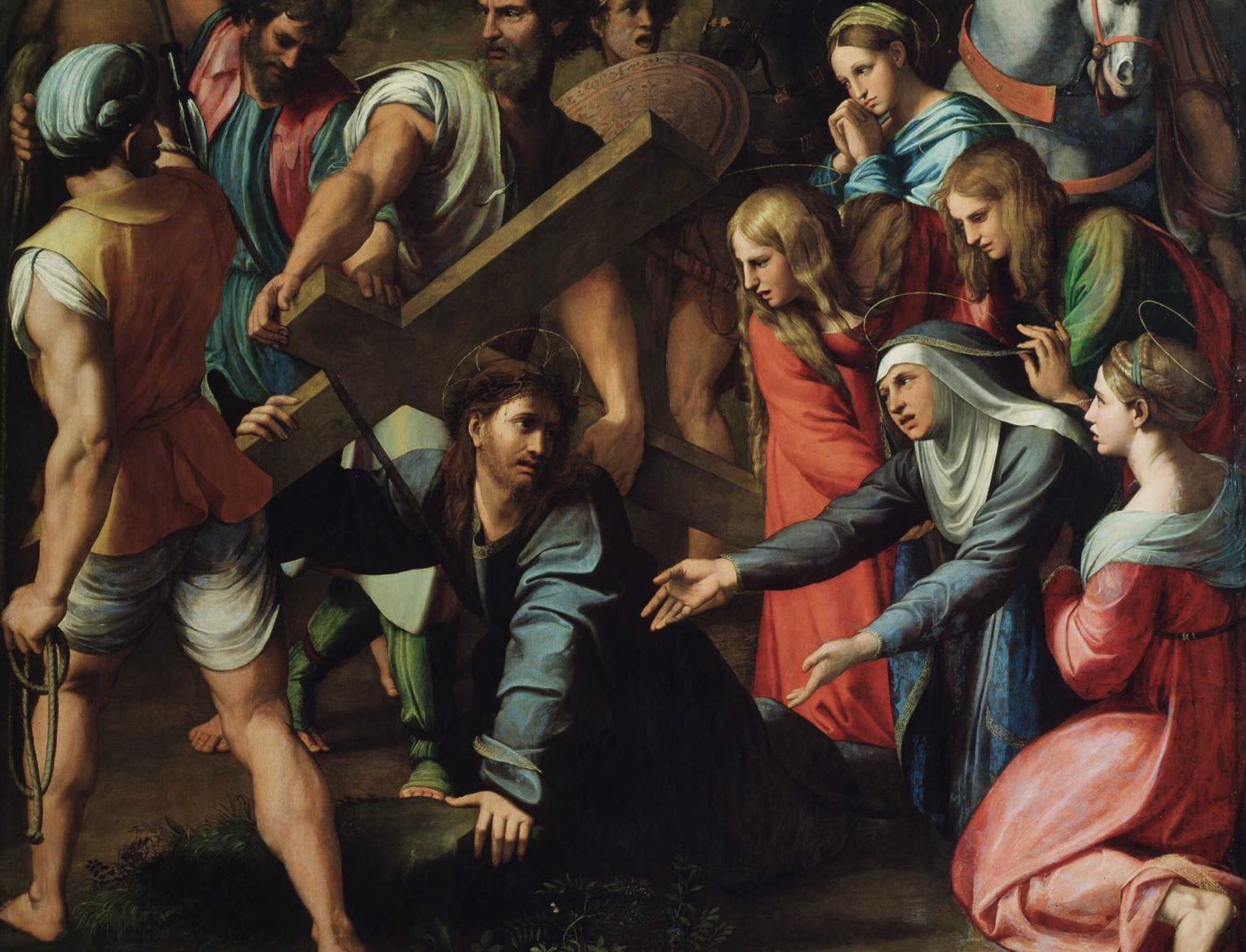
"Christ falls on the way to Calvary #1" is a 1515 painting by Raphael.


“Portrait of Isabella of Portugal”   in 1548 by Titian

This rivals the Mona Lisa. Titian was a discovery for me that day


"The Haywain Triptych," a 1515 painting by Hieronymus Bosch.


Sevilla


Here lies Christopher Columbus. 


Candy


Candy


Candy, in front of the apartment she lived in 50 years ago. 


Sandra and Candy


Guadalquivir River


Cathedral of St Mary by the Sea. It is huge and incorporates an old Mosque's Tower as well as its Courtyard for ablutions.   


Sketching outside the Cathedral while waiting for our timed entrance.


This garden sculpture is an ode to the poem Glorieta by Gustave de Becquer. The poet addresses three kinds of women's faces. First is the face that dreams of love. The second is the face that finds love, and the third is the face that is lost to love.


A beautiful boulevard that Candy walked when attending college here. 

Wednesday, April 30, 2025

The Reina Sofia

 In 1969, this massive building was transformed from a hospital to a Museum of Modern Art. The Hallways are massive, and I could immediately imagine the gurneys going up and down the corridors, which all looked out onto an outdoor courtyard. 


This is a watercolor I did to copy one of the modern paintings. Today we see this style all the time but back in the 1930's this was considered cutting edge art. 


Tennis Player on Yellow 1933 
by Willi Baumeister


Swallow by Joan Miró 
1937


I love the combination of paint,  paper, and lines. 


Joan Miró
Retrato 11
1938


Candy and I are in front of 
The Woman of Guernica 
Pablo Picasso 1937


And of course, the best part of soaking in art is finding art wherever you go next.    


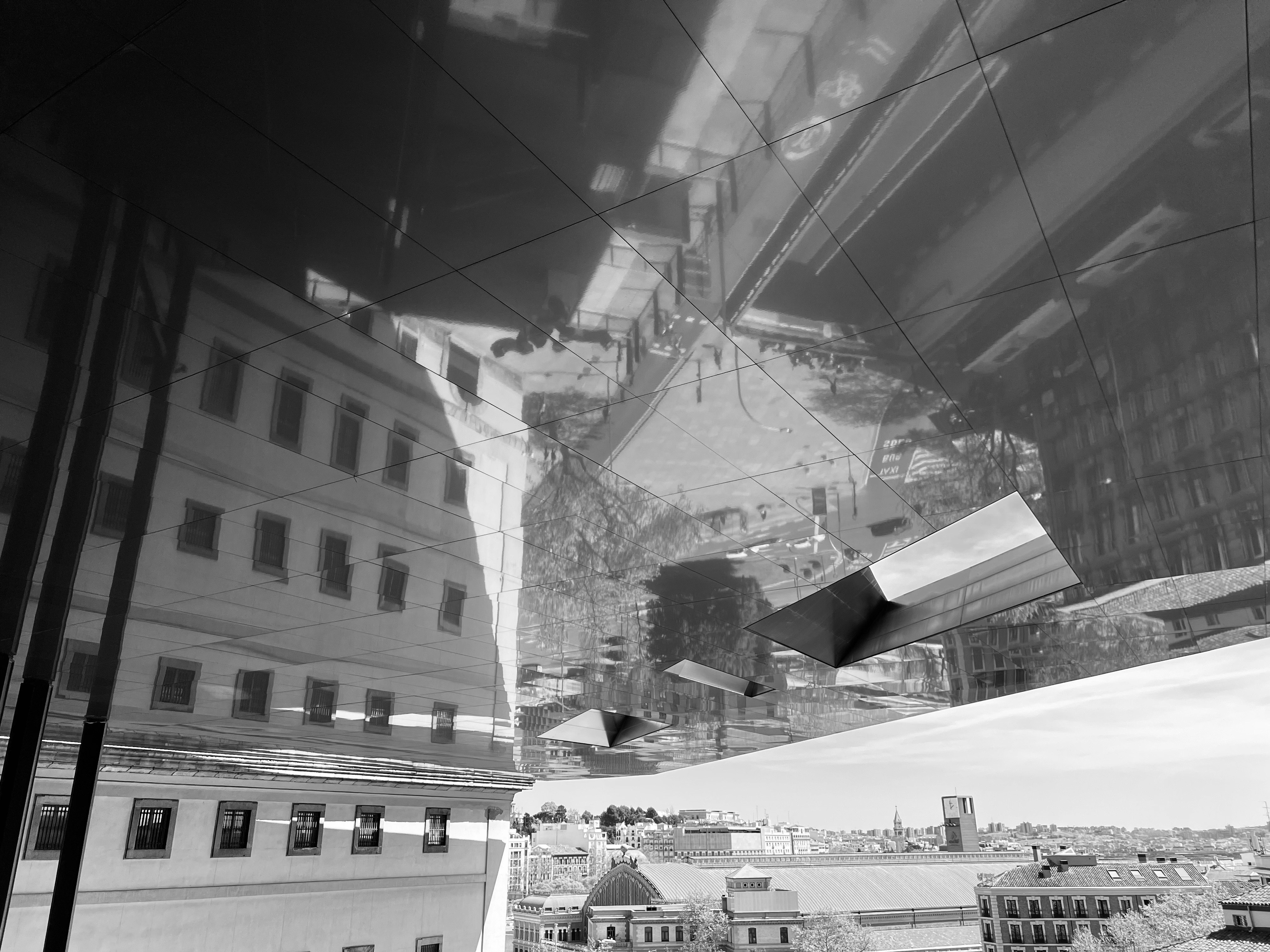
I took this photo on the rooftop of the museum, Black and White, of course. 


And here is a view of the foyer to our apartment.


Check out the lighting! Is this good art or bad art? You decide. 


Tuesday, April 29, 2025

The Unspeakable Beauty of Toledo

 I hesitate to write about Toledo. The town has maintained its medieval presence. And so it was easy to get lost in the past. It seems to me that spirituality, religions, and science were blended together. Technological advances were slower. And there was no separation between spirituality and religion. There was religious tolerance for a while , but the Spanish Inquisition put an end to that. I came away with dozens more questions than answers.  And I am not sure how to get them answered. 

Here are a few

1) Do societies that embrace free speech foster science? Is this what progressive means? 

2) In Toledo, what did the Christians, Jews, and Muslims contribute to astronomy? Or construction?

3) Was there a stronger Roman influence in France than Spain due to its proximity? And did that make for better roads, aqueducts and agriculture and medicine? 

4) How were ideas exchanged from town to town? 

5) What role did beauty play in the construction? Were they said to be inspired by GOD? What was life like when everyone embraced the idea of a soul and Father? How did it elevate its people, and how did it divide them? 

I think I need to research and get back to this. It's all basic history. Now that I have seen the place, my interest is peaked. 


Was the water always this muddy? Is this seasonal after the storm mud? Climate changes? Control of the water upstream?


I bought one of these sketches. They were all very good. Is he from Toledo? What is his story? It seems as if he has had a hard life and only worked with a ballpoint pen and lightweight paper. Now I wish I had bought them all.


What is it like to grow up in a town that has been around longer than any relative you can remember? Are there people who live there now and can trace their roots back to the Middle Ages? New York City has a history, but it is also constantly changing its architecture. So you get a sense of time passing. Here, there is great care to preserve the past. 


My travel buddy Candy, who traces her Sephardic Jewish past to this area. 


This was a private synagogue. And is now a museum. Built in the style of the day. To us, it looks Islamic, but at the time, it was just the style the area. 


Ancient Jewish Carvings. 


The building on the left is a great example of the brick and rock mixtures so typical of this city.


And here was our wonderful and knowledgeable guide. 


Sandra, Candy, and Alex


The header just over this doorway was taken from an abandoned Jewish Cemetery.  


Townmap


Miguel de Cervantes wrote his story, Don Quixote which begins in the Imperial city of  1605 Toledo


Moreno Moreano. I'll take them both. 


Mother Daughter Dynamic Duo